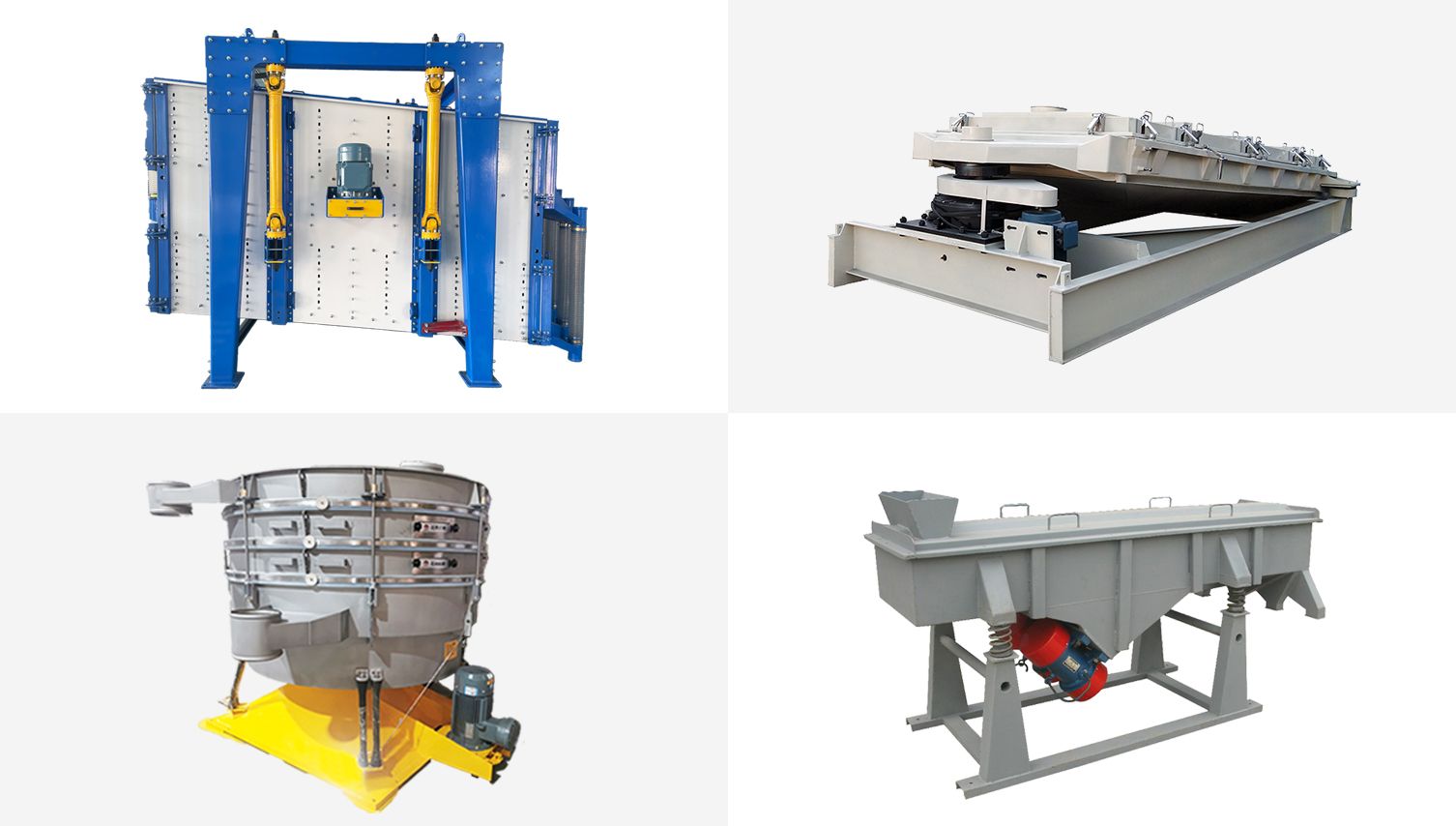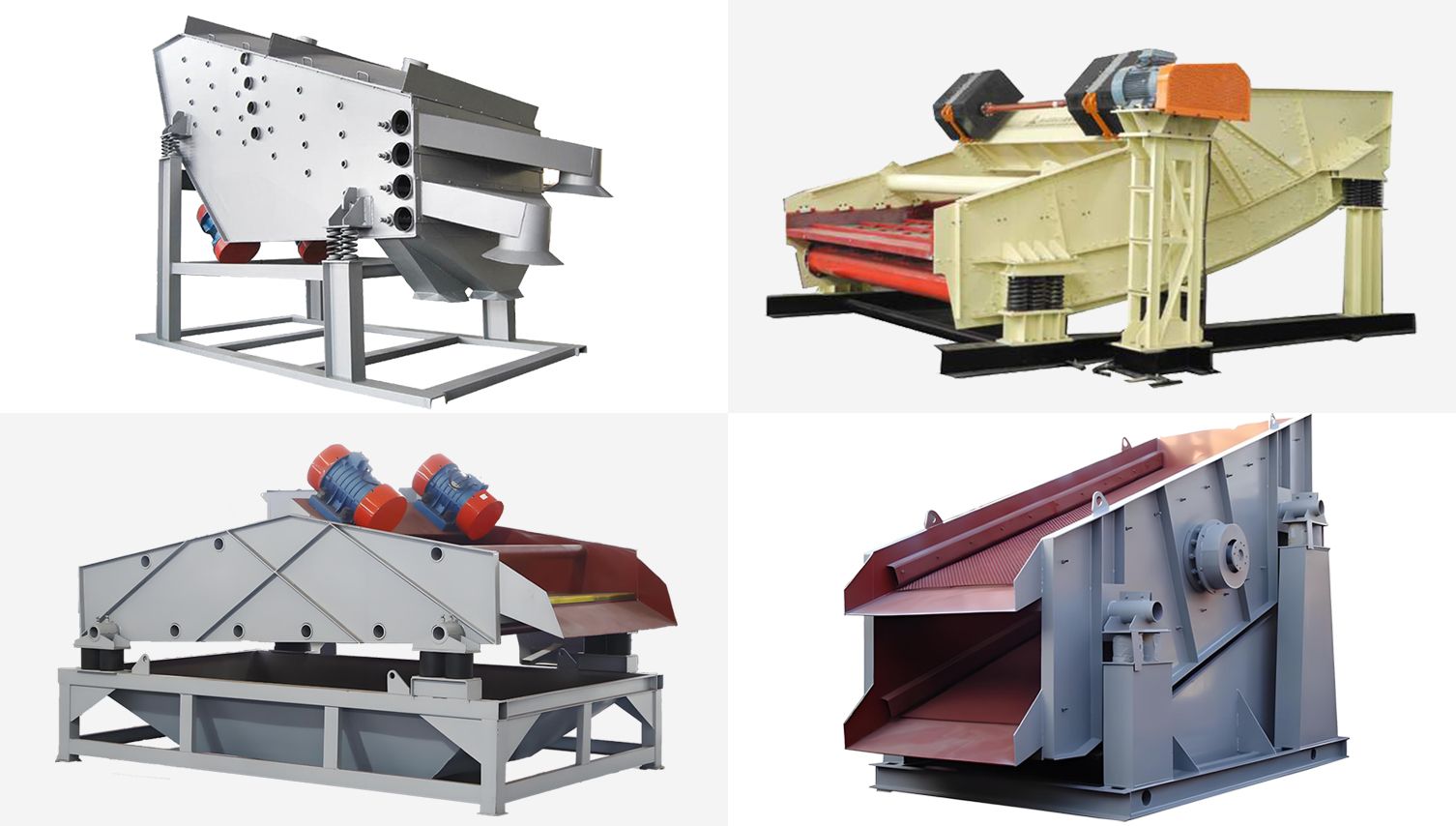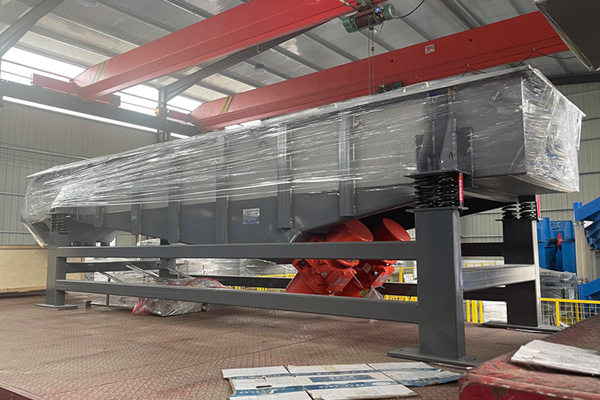
The screening process of a linear vibrating screen requires sufficient "effective residence time." During the time it takes for material to move from the inlet to the outlet, fine particles need to undergo hundreds of throws, stratifications, and contacts with the screen surface. This principle dictates that the speed of the material on the screen surface directly determines the screening efficiency. If the speed is too high, the material is "swept through," and fine particles don't have enough time to pass through; if the speed is too slow, the throughput is insufficient.
Core Problem: Low Efficiency Due to Material "Skimming"
When processing lightweight materials with rounded particles or excellent flowability (such as plastic granules, dry sand, and fly ash), linear vibrating screens often exhibit a phenomenon where the material quickly slides towards the outlet as soon as it contacts the screen surface. High-speed photography reveals that the material is almost in a "sliding" state rather than a "jumping" state; fine particles remain suspended on the surface of the material flow, never having a chance to contact the screen. This results in an excessively high proportion of qualified fine powder in the oversize material (i.e., coarse particles), and the screening efficiency can even be below 50%.
Solution: Introducing Damping Structures and Path Extension Technology
1. Installing Longitudinal Baffles and Guide Strips: Install height-adjustable longitudinal baffles (also called "flow deflectors") at intervals above the screen surface. The baffles force the material layer to tumble and thicken, thereby reducing the flow velocity and forcing the surface material to exchange positions with the lower layer, increasing the chance of fine particles passing through the screen. The gap between the baffle and the screen should be controlled at 1-2 times the material layer thickness.
2. Designing a Labyrinthine Screen Surface or Stepped Screen Plate: Replace the flat screen plate with a stepped screen plate with a certain height difference (e.g., 10-30mm). Each step creates a "waterfall effect," achieving remixing and stratification, effectively extending the actual screening path length. Experience shows that a 3-stage stepped structure can extend the effective residence time by 40%.
3. Adjusting the Vibration Direction Angle to "High Projectile" State: Increase the vibration direction angle from the conventional 40°-45° to over 60°. This results in greater vertical acceleration and less horizontal acceleration for the material, leading to a longer residence time in the air with each throw and a shorter horizontal travel distance, thus "slowing down" the material's forward speed.
4. Reasonably control the length-to-width ratio of the screen surface: For materials with particularly good flowability, a linear vibrating screen with a length-to-width ratio greater than 2:1 (e.g., 3 meters long, 1.2 meters wide) should be selected during equipment selection. A longer screen surface provides a longer screening path, trading space for time.
When a linear vibrating screen exhibits "low screening efficiency" despite a seemingly large throughput, do not blindly increase the vibration force; instead, "decelerate" the screen. Material moving too fast on the screen surface is the enemy of all screening equipment. By cleverly setting baffles, stepped screen surfaces, and adjusting the vibration direction angle, essentially "resistance" is artificially created to gain valuable screening time. This "slow to fast" strategy is particularly suitable for lightweight, highly flowable materials. Remember: for a linear vibrating screen, allowing the material to stay on the screen surface for even one more second may mean screening 10% more fine particles. Efficiency sometimes requires a little patience.
Clearly separated grains, intelligent screening – Mirant Xinxiang Machinery Equipment Co., Ltd.